
Sewer lines · San Francisco
Sewer line repair and sewer lateral replacement in San Francisco.
San Francisco's aging clay and cast-iron sewer laterals (the side sewers that carry wastewater from a building to the city main) are among the most common sources of serious plumbing problems. Lutz Plumbing diagnoses the line on camera, replaces it by traditional excavation, and handles the DPW (the city public works department) permits and SFPUC (the city water and sewer utility) coordination the work requires.
Lutz Plumbing Inc., San Francisco's oldest plumbing company, in business since 1929, repairs and replaces sewer laterals (side sewers) across San Francisco with camera diagnosis, traditional excavation, SSLI reports, and DPW permit handling.
Quick answer
Does my San Francisco sewer lateral need a spot repair or a full replacement?
A camera inspection decides whether a San Francisco sewer lateral needs a spot repair or a full replacement: Lutz Plumbing runs an inspection camera through the lateral to find the exact location and cause of the problem, whether roots, a collapse, a belly (a sag), an offset (a shifted joint), or corrosion in aging clay or cast iron. One damaged section in an otherwise sound line can be a spot repair; a line failing along its length is a replacement.
Replacement is by traditional excavation: the failed section, or the full run from the building to the connection at the city main, is dug up and replaced. Work in the public right-of-way (the sidewalk and street) requires DPW permits and SFPUC coordination, and Lutz handles both as part of the job. You get a written quote before any work starts and the paperwork when the work is signed off.
If you are buying or selling, the same camera work produces a Side Sewer Lateral Inspection (SSLI) report, documented in a form the city accepts, which San Francisco real estate transactions often require.
Sewage backing up into the building?
Stop using every drain and toilet, keep people and pets away from the sewage, and do not add or mix drain chemicals. Call (415) 621-4292; our office answers Monday to Friday, 8:00 AM to 4:30 PM. After hours, leave a voicemail and a dispatcher calls back for genuine emergencies.
Emergency plumbing in San FranciscoThe signs a sewer line is failing usually show up at the lowest drain first.
Sewage comes up through the lowest drain in the building
A floor drain, basement shower, or ground-floor tub that fills when a toilet flushes or a washer drains upstairs is a main-line or lateral warning, not a fixture problem.
Every drain in the house slows or gurgles at once
When the whole house shares the symptom, the restriction is usually downstream of every branch, in the building drain or the lateral.
The main line needs clearing again and again
Repeat blockages usually point to root intrusion, a sagging or bellied section, or deteriorating clay or cast iron that cable clearing cannot fix.
Roots in the line
Roots get in where a joint has opened or the pipe has cracked, so a root clog is evidence of damage as well as a blockage.
A sewage smell, or wet or sunken ground along the lateral's path
Soil that stays damp, sinks, or grows unusually lush over the line can mean the pipe is leaking into the ground.
A cleanout that overflows or bubbles
Water or sewage rising at the outside cleanout (the capped access pipe) when fixtures run means the blockage or break is beyond the cleanout, toward the street.
An older home on a hillside lot, no symptoms yet
Hillside laterals in Noe Valley and Forest Hill and aging laterals in the Mission are regular Lutz calls; age and slope alone are reasons to inspect before a backup.
How a sewer lateral is inspected, permitted and replaced
Camera inspection
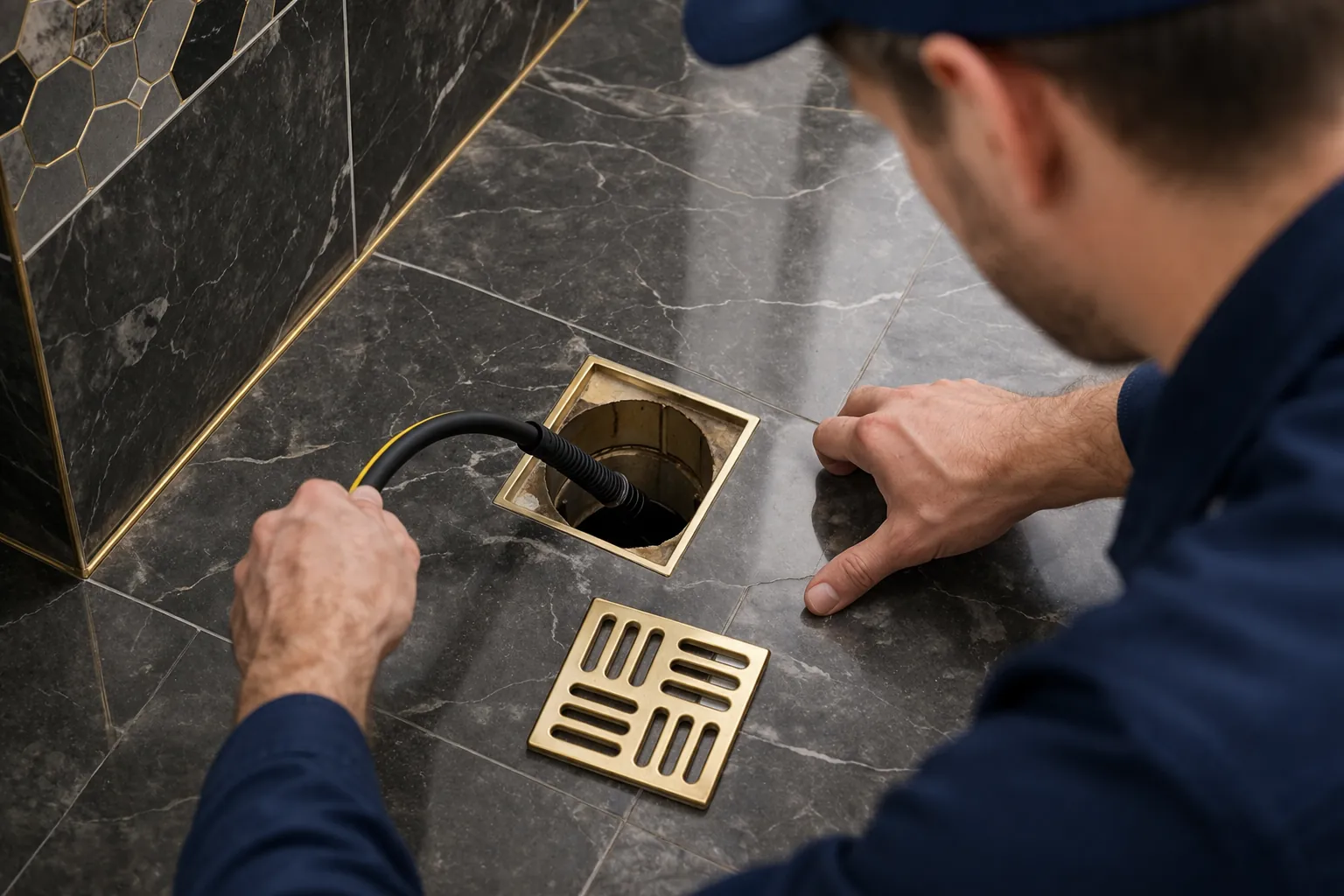
Lutz runs a camera through the lateral to find the exact location and cause, and shows you what it found.
A written scope and quote
The camera findings determine whether the line needs a spot repair or full excavation replacement, and you get a written quote before anything starts.
DPW permits and SFPUC coordination
Lutz pulls the DPW permit and coordinates with SFPUC for any work in the sidewalk or street.
Traditional excavation and replacement
The failed section, or the full run, is dug up and replaced.
Sign-off and paperwork
When the work is inspected and signed off, you receive the permit paperwork.
Sewer repair, drain cleaning and leak detection are different jobs
A single slow fixture or a first-time clog is drain cleaning, with camera inspection included on every drain service; cleaning addresses a blockage, this page addresses a damaged lateral.
Water appearing where there is no drain, a rising water bill, or an SFPUC Leak Alert points to a water supply leak, which is leak detection, not sewer work.
What affects the cost of sewer lateral replacement?
After the camera inspection you get a written quote before any work begins; simple jobs get a fixed price and complex ones get a clear scope plus how we handle anything we discover along the way.
Common questions
What is a side sewer lateral inspection (SSLI) in San Francisco?
An SSLI, or Side Sewer Lateral Inspection, is a camera inspection of the sewer lateral that connects a property to the city main, documented in a report the city accepts. San Francisco real estate transactions often require one. Lutz Plumbing performs the inspection and issues the report; if the camera finds damage, you also get a written repair quote.
Do you handle the DPW permit for sewer work?
Yes, Lutz Plumbing handles the DPW permits and SFPUC coordination that sewer lateral work in the public right-of-way requires, as part of the job. You receive the paperwork when the work is signed off.
How much does sewer lateral replacement cost in San Francisco?
The cost of sewer lateral replacement in San Francisco depends on how deep and long the lateral runs, whether a section or the full run is replaced, the DPW permit and SFPUC coordination required, and whether the trench runs through concrete, sidewalk or landscaping. Lutz Plumbing gives you a written quote after the camera inspection, before any work starts.
How do you know if a sewer lateral needs a spot repair or full replacement?
One damaged section in an otherwise sound lateral can be a spot repair, while a line that is failing along its length is usually a replacement. The camera inspection shows which, by finding the location and cause: roots, a collapse, a belly (a sag), an offset (a shifted joint), or corrosion in aging clay or cast iron.
Do you do trenchless sewer replacement in San Francisco?
No, Lutz Plumbing replaces sewer laterals by traditional excavation (an open trench) rather than trenchless methods, with camera inspection, DPW permits and SFPUC coordination handled. If your job needs trenchless methods (replacement without a trench), we can refer you to a specialist.
What is a sewer lateral (side sewer)?
A sewer lateral, called a side sewer in San Francisco, is the pipe that carries wastewater from a building to the city sewer main. San Francisco's aging clay and cast-iron laterals are among the most common sources of serious plumbing problems; Lutz Plumbing diagnoses them on camera and replaces them by traditional excavation.
Put a camera in the line and get a written answer.
Tell us which fixtures back up, whether it has happened before, whether the property is being sold, and the age of the building if you know it. Photos or video of a backup or of the cleanout help us prepare.