
Resource
Measure your toilet.
Before buying or scheduling a toilet installation, take two measurements: the rough-in distance and the angle stop location. Ten minutes with a tape measure avoids the most common install-day problems, especially with skirted or bidet-style toilets.
Quick answer
Two measurements decide which toilets fit.
Measure the rough-in from the finished wall (not the baseboard) to the center of the toilet's bolt caps; the standard is 12", though older San Francisco homes sometimes have 10" or 14". Then measure the angle stop, the wall shut-off valve: horizontally from the toilet centerline to the valve center, and vertically from the finished floor to the valve center. Skirted and bidet toilets need the valve inside the tolerance window published for that model.
| Measurement | How to take it | Standard | If yours differs |
|---|---|---|---|
| Rough-in | From the finished wall (not the baseboard) to the center of the toilet bolt caps | 12" | 10" and 14" models exist, but selection is limited. Confirm before buying. |
| Angle stop, horizontal | From the toilet centerline (center of the rough-in) to the center of the valve | Varies by model | Skirted and bidet toilets publish a tolerance window. Outside it, the valve must be relocated. |
| Angle stop, vertical | From the finished floor to the center of the valve | Varies by model | A valve set too high or too low can conflict with a skirted body or bidet seat connection. |
Step 1
Measure the rough-in.
The rough-in is the distance from the finished wall (not the baseboard or molding) to the center of the toilet bolts or flange.
Most toilets require a 12" rough-in. Bidet models like the TOTO NEOREST assume a standard 12" as well. Older San Francisco homes sometimes have 10" or 14" rough-ins, which limit your model options, so it pays to check before you fall in love with a toilet.
With the toilet still in place, measure from the wall to the center of the small bolt caps at the base. If the baseboard sticks out, measure from the top of the molding straight back to the wall line, then out to the center of the bolt.
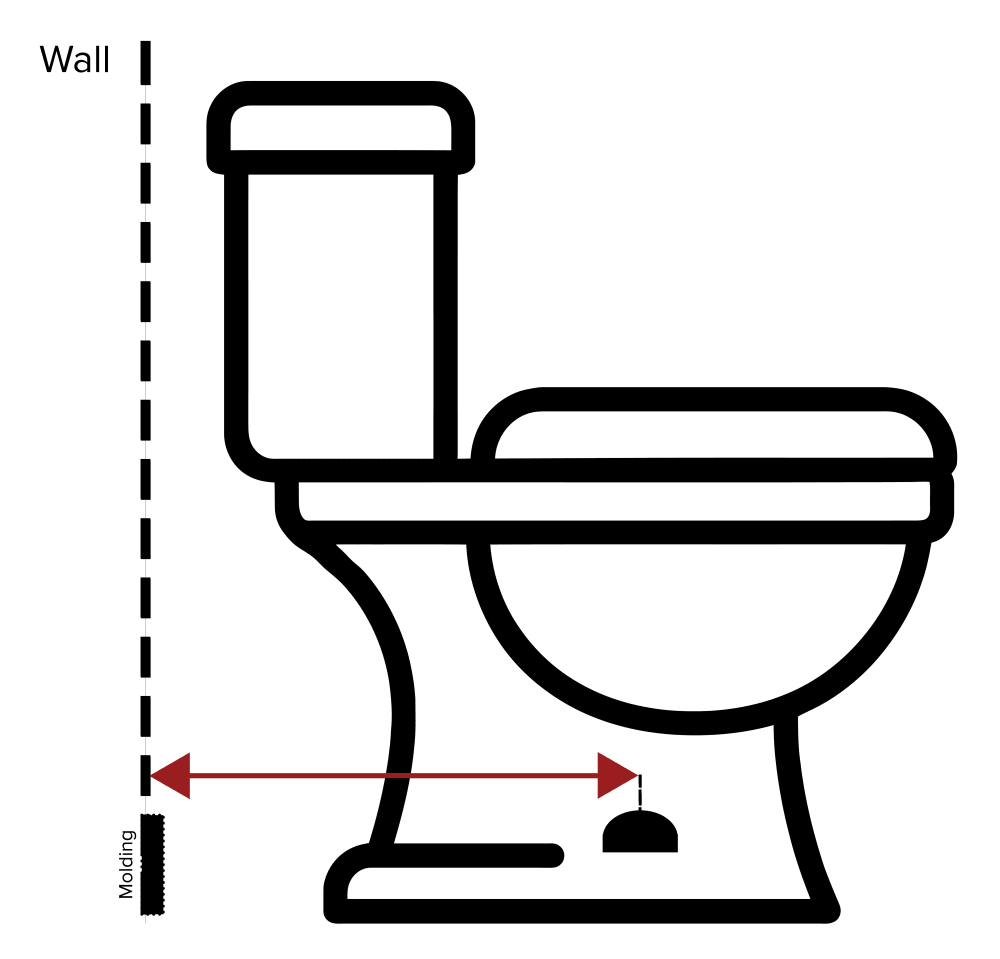
Measure from the finished wall to the center of the bolt caps at the base of the toilet.
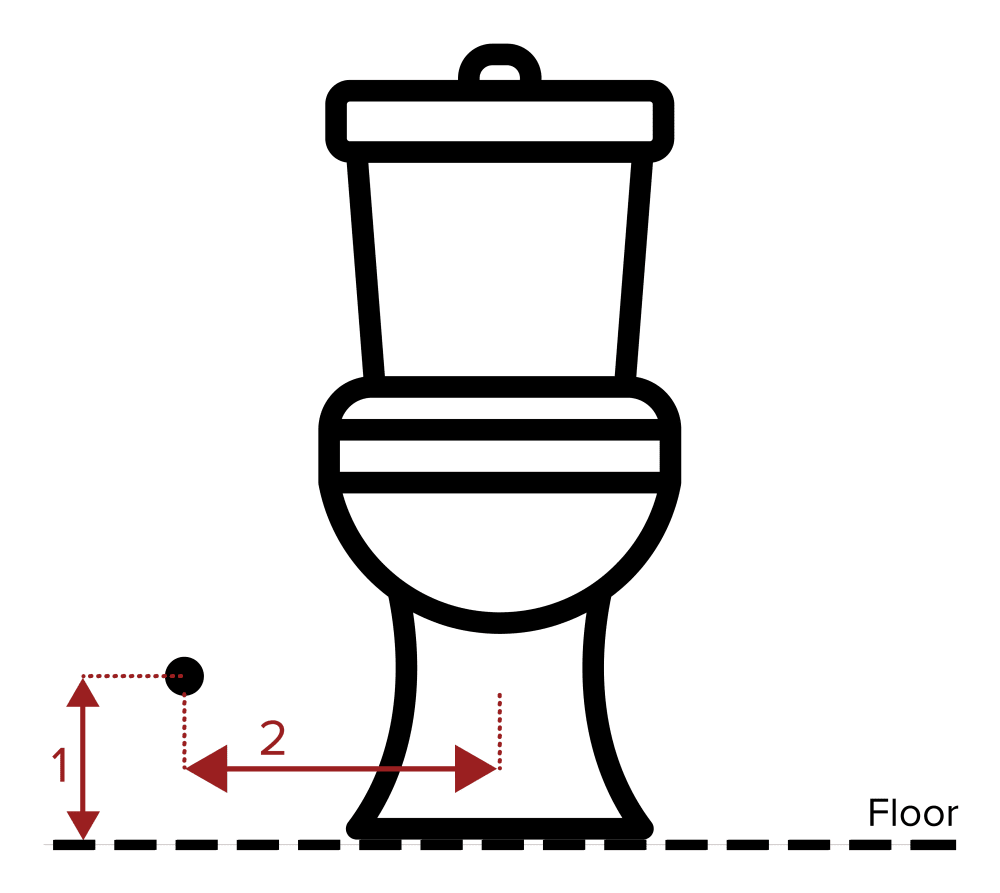
1: vertical distance from the finished floor to the valve center. 2: horizontal distance from the toilet centerline to the valve.
Step 2
Measure the angle stop.
The angle stop is the small shut-off valve on the wall that connects the water supply line to your toilet. Take two measurements:
- Horizontal: from the center of the rough-in (the toilet's centerline) to the center of the valve.
- Vertical: from the finished floor to the center of the valve.
This matters most for skirted and bidet toilets, which need the valve to clear the body of the fixture. Each model publishes its own tolerance window; on some NEOREST models it is only a few inches wide.
Why these two numbers
What your measurements prevent.
Skirted & bidet toilets
Skirted and bidet-style toilets like the TOTO WASHLET and NEOREST hide their plumbing behind a smooth shell. That looks great, but it means the angle stop needs to fall inside a narrow window or the toilet physically will not fit over it.
Avoid install-day surprises
A toilet that does not match your rough-in either stands off the wall with an awkward gap or does not fit at all. Measuring first means the right model shows up on install day, not a return trip.
Faster, firmer quotes
Send us these two measurements with your model of interest and we can confirm fit, flag any valve relocation, and quote the installation before anyone rolls a truck.
Shopping for a smart toilet? Our TOTO NEOREST buying guide covers the angle stop, electrical, and rough-in requirements model by model.
Measurement questions
Common questions, answered.
What is a toilet rough-in?
The rough-in is the distance from the finished wall to the center of the toilet's drain flange, measured at the bolt caps on the base of an installed toilet. It determines which toilets fit your bathroom. The standard rough-in in the United States is 12 inches.
Do I measure the rough-in from the baseboard or the wall?
Measure from the finished wall, not the baseboard or molding. If the baseboard sticks out, hold the tape above the molding at the wall line and measure straight out to the center of the bolt caps. Measuring from the baseboard makes the rough-in read short and can lead to buying the wrong toilet.
What if my rough-in is 10 or 14 inches?
10 inch and 14 inch rough-ins are common in older San Francisco homes. Many manufacturers make 10 inch and 14 inch versions of popular models, and an offset flange can sometimes bridge the difference, but selection is much narrower. Confirm the exact rough-in before buying, or send us the measurement and we will confirm which models fit.
Where does the angle stop need to be for a skirted or bidet toilet?
Inside the tolerance window published for that specific model. Skirted and bidet toilets cover the area behind and beside the bowl, so the shut-off valve must clear the body. On some TOTO NEOREST models the window is only a few inches wide. Measure the valve's horizontal distance from the toilet centerline and its vertical height from the finished floor, then check them against the model's spec sheet. If the valve falls outside the window, it can be relocated before installation.
Does a bidet toilet or WASHLET seat need an electrical outlet?
Yes. Bidet seats and integrated smart toilets are plug-in appliances and need a 120V GFCI protected outlet within reach of the toilet, typically within 3 feet. For integrated models like the TOTO NEOREST, a dedicated 15 amp circuit is recommended. If there is no outlet near the toilet, plan for an electrician visit alongside the plumbing work.
Rather have us measure?
Book a site check and we will confirm your rough-in, angle stop, and any electrical needs before you commit to a model. Or send us your measurements and the toilet you have in mind, and we will confirm fit and quote the installation.